Two primaries, two losing money piles, and one word doing the joining: 'oligarchs.'
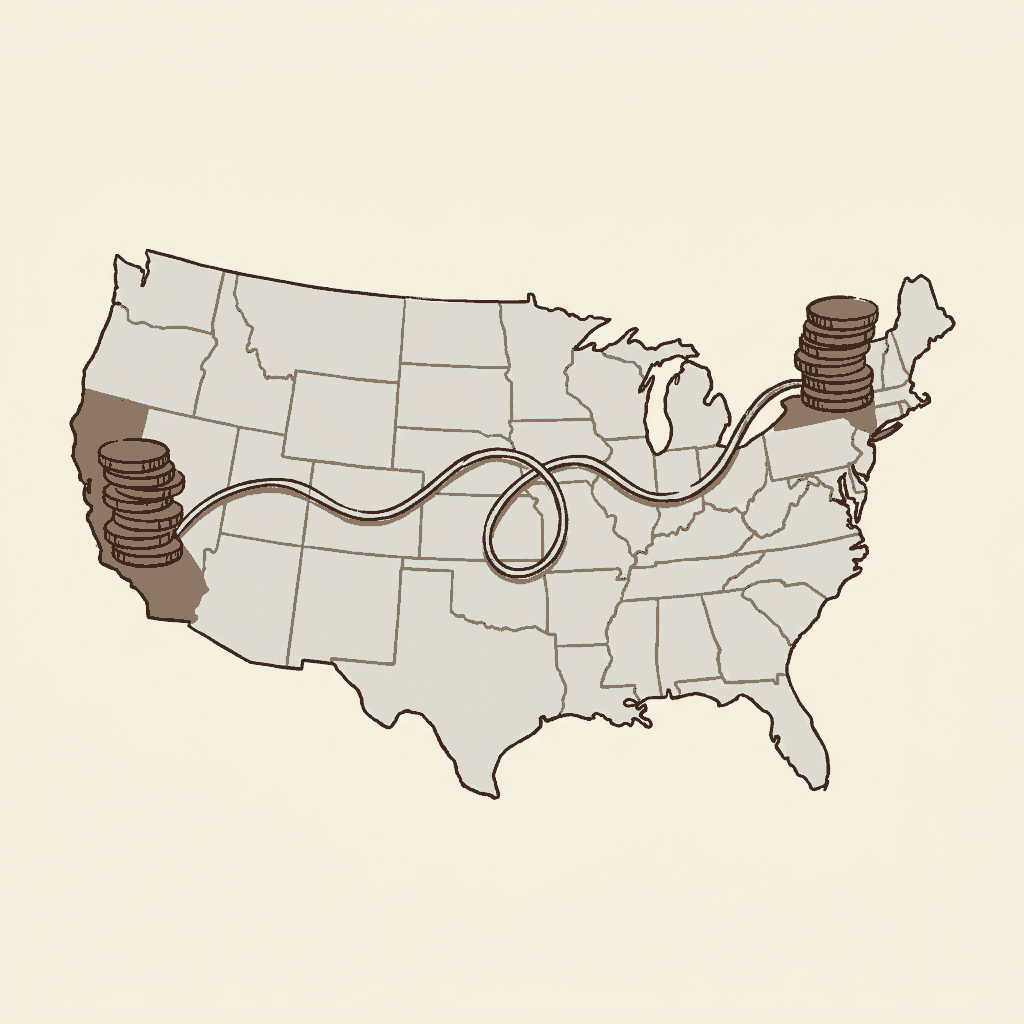
After Abdul El-Sayed and Peggy Flanagan won their Senate primaries against heavily funded rivals, Sen. Bernie Sanders posted that super PACs spent more than $85 million to beat them, lost both races, and that 'the American people are rising up against the oligarchs.'
The pattern holds: roughly $60 million against El-Sayed, over $20 million against Flanagan, and both won anyway. Outside money lost twice in one week, and saying so is fair.
The compression is in 'the oligarchs.' Michigan's spending ran through pro-Israel-aligned groups and Minnesota's through a broader establishment mix, and nothing in the reporting ties them into one cross-state operation. Two defeats made a pattern; they didn't make a class.
Three checks: on the spending and the results, on whether the $85 million figure adds up, and on whether one coordinated network spans both states.
Being right about what happened and wrong about what it proves are different failures, so these two lines never get averaged into one score. How this works
The logic check
If the claim is right, these things should be true. Here's what we found. Each check says which version of the claim it's testing, the plain one most people would hear or the widest one the same words could carry, and whether it carries the claim's own burden or establishes the background it sits on.
If the minimal reading holds, independent reporting should confirm outside groups spent significantly more backing the establishment-aligned candidate in both races, and the progressive candidate won regardless.
Reading survivesIn Michigan, pro-corporate and pro-Israel-aligned groups spent roughly 60 million dollars backing Haley Stevens against El-Sayed, who won by about one point. In Minnesota, outside groups spent over 20 million dollars backing Angie Craig against Flanagan, who won anyway. source
If the $85 million combined figure is accurate rather than rounded upward, reporting should show roughly 60 million in Michigan and 20 to 25 million in Minnesota spent specifically against the two progressive candidates, summing near that total.
Reading strainedReported totals land close to Sanders' figure, but outlets differ on the exact split, and some Michigan totals include broader multi-candidate primary spending rather than anti-El-Sayed spending alone. source
If the strongest reading holds, a broad American people versus oligarchs uprising, independent reporting should document one coordinated donor network operating across both states rather than separate state-level spending by groups with separate interests.
Reading failsReporting describes distinct spending networks: pro-Israel-aligned groups including AIPAC-aligned PACs led Michigan spending, while a broader mix of corporate and establishment donors backed Craig in Minnesota. No reporting found ties these into one coordinated cross-state operation. source
The full scoring
The raw numbers behind the verdict. What R/I/P/E/L and charge stages mean: how we score.
Research verdict: mixed evidence. The research found some of what the claim predicts and not the rest.
The claim is that billionaire-funded super PACs spent a coordinated $85 million to buy the Michigan and Minnesota Senate primaries, and that losing both shows the American people rising up against one oligarch class. The plain reading holds: roughly $60 million backed Haley Stevens against El-Sayed, who won by about a point, and over $20 million backed Angie Craig against Flanagan, who won anyway. The $85 million total lands close to reported figures, though outlets differ on the split. The widest reading fails: pro-Israel-aligned groups led the Michigan spending and a broader mix of corporate and establishment donors backed Craig in Minnesota, with nothing tying them together. The money lost twice; the single class behind it isn't in the record.
Source record: hobocode.net Fault Line Report 2026-W33
The Fault Line Report, August 10 to 16, 2026
All eight narratives with the full logic test, the mirror check, the R/I/P/E/L factors and the coverage notes on each lane. This page is the plain-language cut; that one is the whole thing, including the polarization methodology that defines every score here.