'Shall we have a call?' versus 'will call later,' and a charge of outright lying built on the gap.
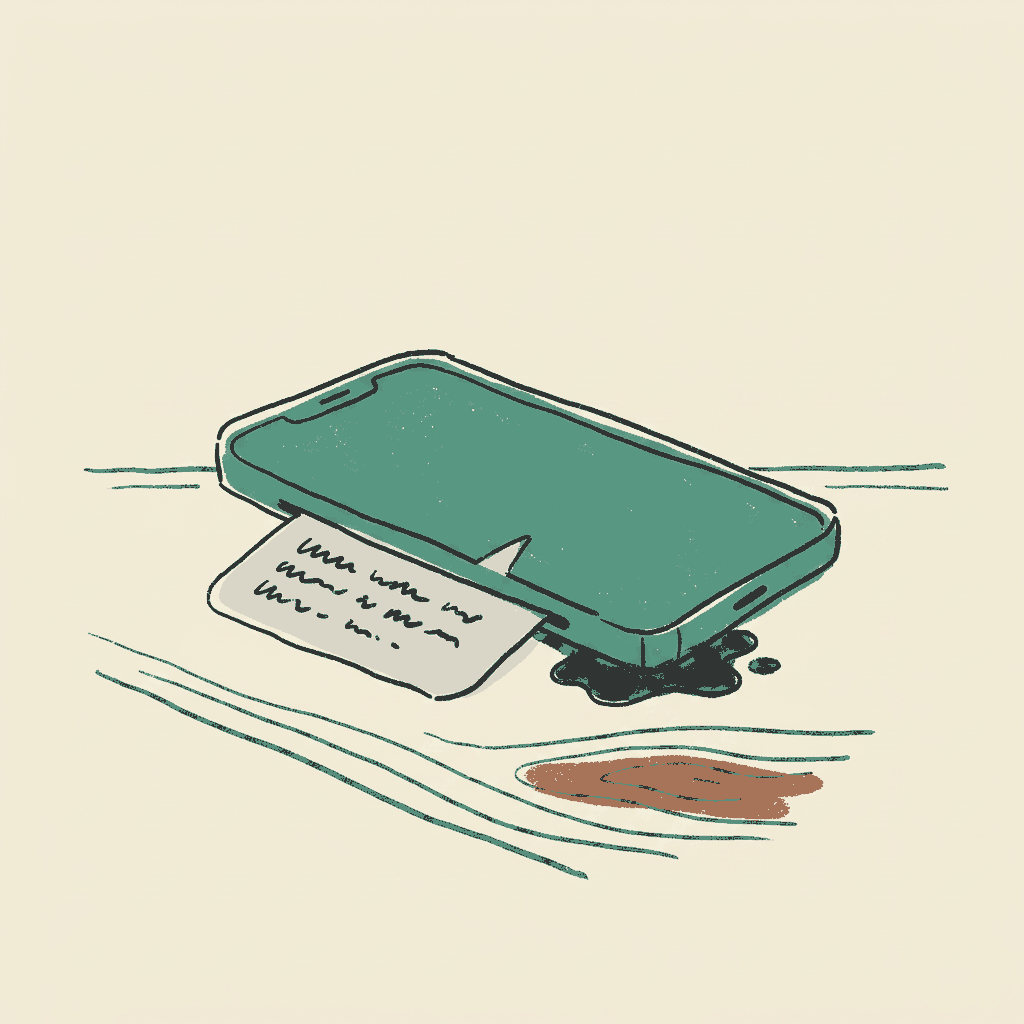
Nigel Farage told an August 3 press conference he had asked Rupert Lowe 'should we have a call?' Lowe posted a screenshot showing the actual text read only 'Will call later,' and called Farage's account 'just a lie.'
Lowe's own evidence undercuts the strongest version of his own charge: Reform did send a message, so the outreach wasn't invented.
What's left is a real, smaller gap: Farage's public paraphrase was more conciliatory than the text he actually sent. Both men still confirm pact talks are continuing regardless.
Three checks: on what Lowe's own screenshot actually shows, on whether Reform can produce any evidence of contact at all, and on whether the dispute has closed the door on a pact.
Being right about what happened and wrong about what it proves are different failures, so these two lines never get averaged into one score. How this works
The logic check
If the claim is right, these things should be true. Here's what we found. Each check says which version of the claim it's testing, the plain one most people would hear or the widest one the same words could carry, and whether it carries the claim's own burden or establishes the background it sits on.
If the minimal reading holds, Lowe's own screenshot evidence should show a real message was sent, even if its wording differs from Farage's paraphrase.
Reading survivesLowe's screenshot, cited by HuffPost UK, shows Farage texted 'Will call later' at 10:30am the day before the press conference; a Reform source told HuffPost 'Nigel said he texted Rupert and didn't get a reply. That's factual as his screenshot shows.' source
If the strongest reading holds, Reform should be unable to produce any evidence of contact, since the claim is that Farage's outreach was invented wholesale.
Reading failsReform's own spokesperson confirmed and cited the same screenshot as proof contact was made, directly contradicting the idea that no outreach happened. source
If the 'lying' charge is genuinely about trust rather than a rupture, Lowe should still leave the door open to an actual Restore-Reform pact.
Reading survivesLBC reported the same day that Lowe 'accuses Farage of lying but says Reform and Restore can still work together,' and Farage separately told reporters he remained 'open-minded' about a deal. source
The full scoring
The raw numbers behind the verdict. What R/I/P/E/L and charge stages mean: how we score.
Research verdict: mixed evidence. The research found some of what the claim predicts and not the rest.
The claim, from Rupert Lowe, is that Nigel Farage misrepresented a private text exchange to control the story around a possible Reform-Restore pact. Read narrowly, there's a real gap: Farage told an August 3 press conference he'd asked Lowe “should we have a call?”, and Lowe's own screenshot shows the text sent the day before read only 'Will call later.' Read widely, the screenshot undercuts the 'just a lie' charge: a message was really sent and Reform's own spokesperson cited the same screenshot, so the outreach wasn't invented. Both men also say the parties can still work together, with Farage calling himself 'open-minded.' A paraphrase more conciliatory than the text, escalated into a dishonesty charge.
Source record: hobocode.net Fault Line Report 2026-W32
The Fault Line Report, August 3 to 9, 2026
All fourteen narratives with the full logic test, the mirror check, the R/I/P/E/L factors and the coverage notes on each lane. This page is the plain-language cut; that one is the whole thing, including the polarization methodology that defines every score here.