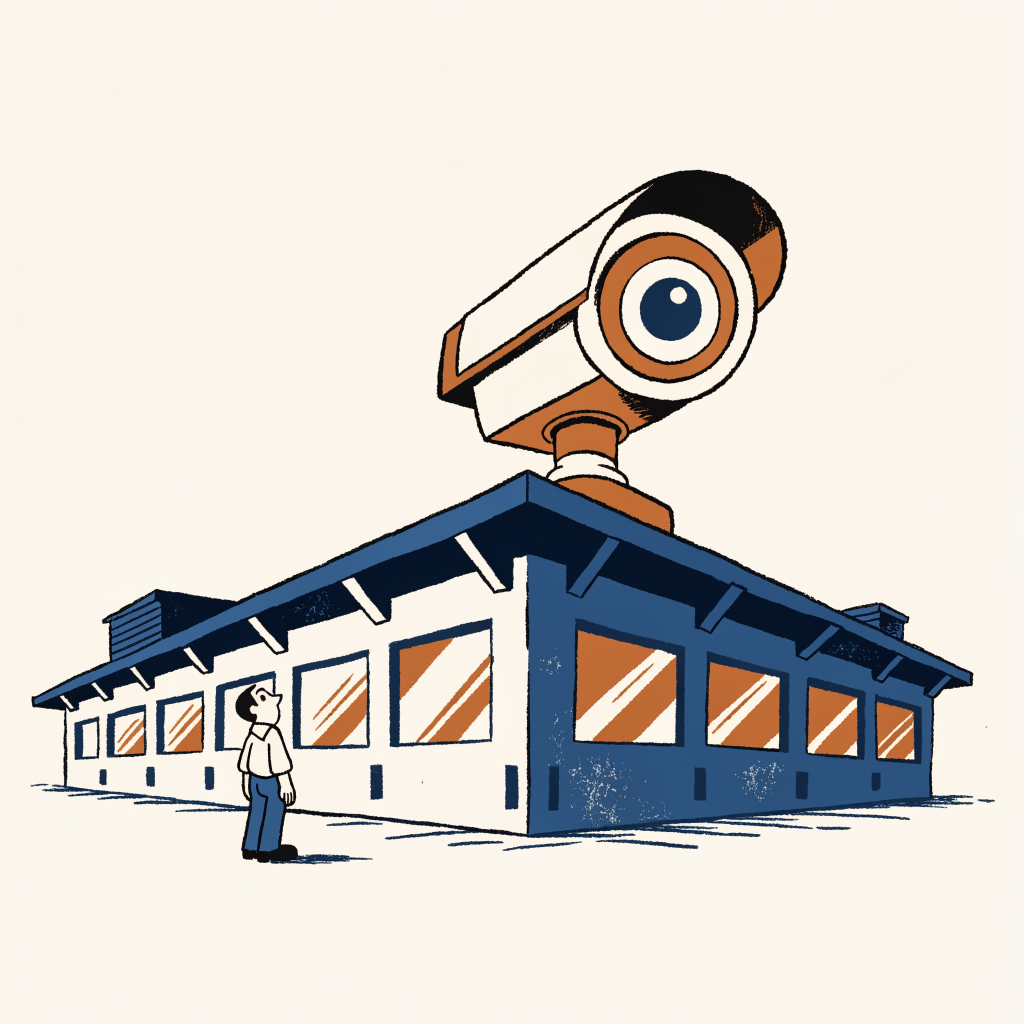
Anthropic turned down a $200 million Pentagon contract rather than loosen its rules against mass surveillance. Not the move of a company building one big watch machine.
OpenAI signed a deal putting its models on Department of War classified networks on February 28, 2026, hours after Anthropic was designated a supply chain risk for refusing to loosen its surveillance and autonomous-weapons guardrails. The news set off the QuitGPT boycott and protests outside OpenAI's San Francisco office. In May, Steve Bannon's Humans First coalition sent an open letter to the President warning against unelected elites experimenting on the public. In July, commentator Mike Cernovich warned that Big Tech's AI buildout meant sweeping surveillance, and former White House AI adviser David Sacks agreed the industry could turn into Big Brother.
The fight over surveillance is real, not imagined. Anthropic gave up a $200 million Pentagon contract rather than loosen its guardrails against mass surveillance and autonomous weapons, and OpenAI had to publicly promise its own deal doesn't cover mass surveillance of U.S. citizens. Those are genuine fights over what the technology gets used for.
What doesn't hold up is the idea that the whole industry is quietly building one surveillance machine. The company that said no walked away from real money to say it, and a former White House adviser answered the surveillance fear by pointing people toward open-source models they can run themselves, the opposite of a centralized watch machine. Mixed evidence: the questions are live, the master plan isn't proven.
One prediction held, two came back mixed, one didn't. Four in total.
Being right about what happened and wrong about what it proves are different failures, so these two lines never get averaged into one score. How this works
The logic check
If the claim is right, these things should be true. Here's what we found. Each check says which version of the claim it's testing, the plain one most people would hear or the widest one the same words could carry, and whether it carries the claim's own burden or establishes the background it sits on.
Surveillance should be a real bargaining chip in actual government contracts, not just a hypothetical.
Holds trueThe February Pentagon deal turned on exactly this: Anthropic got cut off for refusing to loosen its surveillance guardrails, and OpenAI's replacement deal faced scrutiny over whether its no-mass-surveillance promise actually holds up.
If surveillance were the industry's real goal, major labs should fight to keep surveillance-friendly contract language, not give up revenue to avoid it.
FalseAnthropic walked away from $200 million rather than drop its anti-surveillance guardrails, real money given up to keep a real restriction. OpenAI's side is murkier: it signed the deal and said it bars mass surveillance of U.S. citizens, but the Electronic Frontier Foundation called the original language "weasel words" full of loopholes, and Altman himself later admitted the initial terms were "opportunistic and sloppy" before OpenAI rewrote them under public pressure. One lab's refusal is solid evidence against uniform intent. The other lab's promise needed a backlash to mean much, so it carries less weight than Anthropic's. EFF: "weasel words" OpenAI revises the deal
If centralized control were the goal, industry voices should be against open-source AI people can run themselves, since that undercuts any centralized surveillance apparatus.
MixedA former White House AI adviser pointed to open-source, self-hosted models as the way out of surveillance, and open-weight releases remain a major industry current. But that response came from a former official promoting open source, not from the industry's own conduct, so it only partly answers the question.
If the distrust is tracking something real, there should be documented AI-era surveillance expansion happening somewhere in this window.
MixedThe Intercept found a Philadelphia fusion center flagging social media criticism of AI data centers as a possible extremism indicator, in June 2026. The surveillance expansion is real, but it's law enforcement doing it, not the AI companies.
The receipts
Every quote, checked against its source.
Mike Cernovich
"With AI and infinite data centers, Big Tech will be able to implement cradle-to-crave surveillance. Every digital currency and drive on the road logged. Sentiment modeled in real time. I don't trust these guys. They pushed Covid-era lockdowns and vaccine mandates."
David Sacks (former White House AI adviser)
"Cernovich is right that AI + Big Tech could easily turn into Big Brother."
Humans First open letter (Steve Bannon, Amy Kremer and roughly 60 co-signers)
"America did not become the greatest nation in the world by allowing unelected elites to experiment on the public without safeguards or accountability."
QuitGPT campaign statement
"OpenAI agreed to let the Pentagon use its tech for 'any lawful purpose,' including killer robots and mass surveillance."
"The Last Friendly Robot" (pseudonymous QuitGPT protest organizer)
"Who wants mass surveillance? Only the Epstein class."
The full scoring
The raw numbers behind the verdict. What R/I/P/E/L and charge stages mean: how we score.
Research verdict: mixed evidence. This is the category the underlying research assigned before we graded the individual checks, and it came back the same on every card in this set.
R 3 for recurring carriage through a widely read tech newsletter, an Axios-to-Sinclair-to-Gizmodo press cycle, and two 380k-plus-impression X posts, without saturating major-outlet adoption of the frame itself. I 4 because motive attribution is the running lens with essentialization (Epstein class, unelected elites) and existential stakes (Big Brother, Panopticon) present, but without camp-wide purity policing. P 4 from the same frame arising independently on the coalition's left-populist and MAGA-right wings. E 3: no sitting official carries the frame in the verified set; the strongest adjacent voices are a former White House adviser partially validating the stakes premise and partisan-media principals on the open letter. L 3 because the opposing camp responds, via the astroturf counter-frame and Sacks's engagement, without a locked mutual-citation loop.
Mirrors: The tech-camp counterpart on the same fights recasts the anti-buildout movement itself as astroturf or a psyop, launched against the Humans First letter in the same week (the Bull Moose Project and Washington Examiner framing of May 18), while Sacks's July 21 reply partially concedes the stakes premise and contests only the remedy; neither side yet runs on the other as its primary evidence, so we code answered rather than locked.
Keeps coming back:
- OpenAI Pentagon deal and Anthropic supply chain risk designation, late February through March 2026
- Humans First letter against unvetted frontier model releases, May 18 2026
- National data center protest weekend and the July buildout coverage, July 18 through 21 2026
Source record: counter-hate-monitor/counter-hate-work/special-reports/2026-tech-ai-fault-line/cards.json#pol-surveillance-control
The AI fault line, January to July 2026
Thirteen narratives, every carrier quote, the full scoring, and the coverage notes on what we couldn't verify. This page is the plain-language cut; that one is the whole thing, including the polarization methodology that defines every score here.